Shop this guide
As an Amazon Associate we earn from qualifying purchases.
NRR and SNR are different standardized noise-reduction rating systems. Compare NRR with NRR and SNR with SNR. A higher number under one system cannot be treated as a directly equivalent advantage over a number under the other.
Neither label is a measurement of the attenuation you personally receive while sleeping. Fit and the noise being considered matter, and a product rating does not establish overnight comfort or whether you will hear an alarm.
Sleep earplug NRR chart
31 earplugs sold in the United States, with the NRR as the maker prints or publishes it and the SNR where the maker publishes one. Each row links to the maker page or datasheet it came from. A blank cell means the maker did not publish that value on the page we read. Checked November 8, 2026.
As an Amazon Associate we earn from qualifying purchases.
| Brand | Earplug | Type | NRR (US label, dB) | SNR (EU label, dB) | Source | Amazon |
|---|---|---|---|---|---|---|
| Mack's | Slim Fit Soft Foam Ear Plugs | Polyurethane foam | 31 | Maker page | View on Amazon | |
| Mack's | Pillow Soft Silicone Putty Ear Plugs | Moldable silicone putty | 22 | Maker page | View on Amazon | |
| Mack's | Ultra Soft Foam Ear Plugs | Polyurethane foam | 33 | Maker page | Search Amazon | |
| Mack's | Dreamgirl Soft Foam Ear Plugs | Polyurethane foam | 30 | Maker page | Search Amazon | |
| Mack's | Snore Blockers Soft Foam Ear Plugs | Polyurethane foam | 32 | Maker page | Search Amazon | |
| Mack's | Maximum Protection Soft Foam Ear Plugs | Polyurethane foam | 33 | Maker page | Search Amazon | |
| Mack's | Original Soft Foam Ear Plugs | Polyurethane foam | 33 | Maker page | Search Amazon | |
| Mack's | Sound Asleep Soft Foam Ear Plugs | Polyurethane foam | 32 | Maker page | Search Amazon | |
| Mack's | Snoozers Silicone Putty Ear Plugs | Moldable silicone putty | 22 | Maker page | Search Amazon | |
| Mack's | Snore Mufflers Silicone Putty Ear Plugs | Moldable silicone putty | 22 | Maker page | Search Amazon | |
| Mack's | Blackout Soft Foam Ear Plugs | Polyurethane foam | 32 | Maker page | Search Amazon | |
| Mack's | Ear Seals Dual Purpose Ear Plugs | Silicone | 26 | Maker page | Search Amazon | |
| Mack's | ThermaFit Soft Foam Ear Plugs | Soft foam (maker FAQ says PVC, latex-free) | 30 | Maker page | Search Amazon | |
| HEAROS | XTREME Foam Earplugs | Polyurethane foam | 33 | Maker page | View on Amazon | |
| HEAROS | Sleep Pretty in Pink Foam Ear Plugs | Polyurethane foam | 32 | Maker page | Search Amazon | |
| HEAROS | Ultimate Softness Series Ear Plugs | Foam | 32 | Maker page | Search Amazon | |
| HEAROS | Nanos Foam Ear Plugs (extra small) | Foam with closed-cell skin | 28 | Maker page | Search Amazon | |
| HEAROS | DAZZLEARS Bling Ear Plugs | Polyurethane foam | 32 | Maker page | Search Amazon | |
| OHROPAX | Classic (US, 12 pieces) | Wax | 23 | Maker page | Search Amazon | |
| Loop | Dream | Silicone body, foam-silicone tips | 21 | 27 | Maker page | View on Amazon |
| Loop | Quiet 2 | Soft-touch silicone | 14 | 24 | Maker page | View on Amazon |
| Loop | Experience 2 | Reusable | 12 | Maker page | Search Amazon | |
| Loop | Engage 2 | Reusable | 8 | Maker page | Search Amazon | |
| Loop | Switch 2 | Reusable, three modes | 20 / 23 / 26 (Engage / Experience / Quiet mode) | Maker page | Search Amazon | |
| Decibullz | Custom Molded Earplugs | Re-moldable thermoplastic | 31 | Maker page | Search Amazon | |
| Decibullz | Custom Molded High-Fidelity Earplugs | Re-moldable, high-fidelity | 12 | Maker page | Search Amazon | |
| Eargasm | MAX High Fidelity Earplugs | Hypoallergenic silicone | 21 | Maker page | Search Amazon | |
| Honeywell Howard Leight | Laser Lite | Polyurethane foam | 32 | 35 | Maker page | Search Amazon |
| Honeywell Howard Leight | Max | Polyurethane foam | 33 | 37 | Maker page | Search Amazon |
| Honeywell Howard Leight | Max Small | Polyurethane foam | 30 | Maker page | Search Amazon | |
| Honeywell Howard Leight | Laser Trak (detectable) | Polyurethane foam with brass | 33 | Maker page | Search Amazon |
Download the table as CSV (brand, product, type, NRR, SNR, source URL, check date).
How to read the chart
- Compare NRR with NRR. The highest label in the chart is NRR 33, printed for six earplugs: Mack’s Ultra Soft, Maximum Protection and Original, HEAROS XTREME, and Honeywell Howard Leight Max and Laser Trak. Silicone putty and wax plugs in the chart carry lower labels, from 22 to 26.
- SNR is a different scale. Where a maker publishes both numbers for one earplug, they are shown side by side (Loop Dream: NRR 21, SNR 27). Do not subtract or convert between them. Most US maker pages publish only an NRR, so a blank SNR cell means “not published on the page we read,” not “none exists.”
- A label is not a personal result. It does not tell you how an earplug will fit your ear or feel overnight, and it does not show whether you will hear an alarm.
- Coverage. The chart covers Mack’s, HEAROS, OHROPAX, Loop, Decibullz, Eargasm and Honeywell Howard Leight. Other brands are not in it yet because their maker pages were not readable by us or did not state a rating, so a missing brand is not a verdict.
Cite this chart: Sound Sleep Gear, “Sleep earplug NRR chart,” checked November 8, 2026, https://soundsleepgear.com/guides/earplug-nrr-vs-snr-personal-fit/ . The CSV has a source URL for every row. If a maker’s page differs from a row, the maker’s page is right.
Change log: November 8, 2026, chart added with 31 rows. Values are rechecked against the maker pages when the chart is updated, and the check date above changes with them.
Why one product can have two numbers
Loop’s published Quiet 2 figures are 24 dB SNR and 14 dB NRR. These describe the same product under different rating systems. They are not two user-selectable protection modes and are not measurements made by this site.
A NIOSH/CDC-hosted research paper on personal attenuation discusses NRR and the ISO 4869-2 SNR approach, along with the effects of fit and noise spectrum. The different figures should not be collapsed into a fixed conversion rule for every earplug.
What each piece of evidence establishes
| Evidence | What it supports | What still needs separate evidence |
|---|---|---|
| A published NRR | The product’s rating under that system | Your fit, actual exposure and relevant use conditions |
| A published SNR | The product’s rating under that system | Your fit and a comparable same-system assessment |
| Individual fit-testing result | Attenuation assessed for the person and test conditions | Continued correct use and the applicable exposure assessment |
| Comfort or alarm claim | Only what the specific evidence actually evaluates | It cannot be inferred from NRR or SNR alone |
Do not simply subtract a package rating from a bedroom sound reading to declare the sound reaching your ears. This guide provides no household attenuation calculator or fixed NRR-to-SNR conversion.
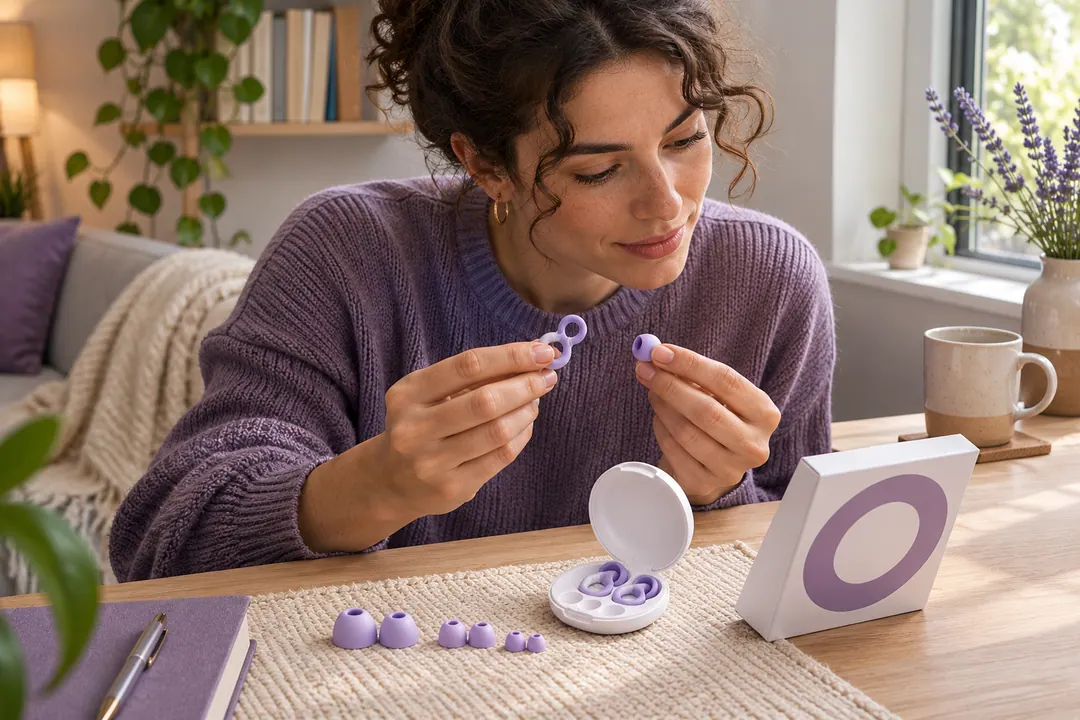
Fit-testing guidance has changed
NIOSH’s 2025 individual fit-testing update recommends individual fit testing for occupational decisions and supersedes its 1998 derating guidance. An older article repeating that earlier formula should not be treated as the current NIOSH recommendation.
That is workplace guidance. It does not turn a home comfort check into an occupational fit test, nor does it establish that a particular earplug is appropriate for every sleeping situation. For workplace protection, use the applicable exposure assessment and fit-testing process rather than choosing from the largest package number alone.
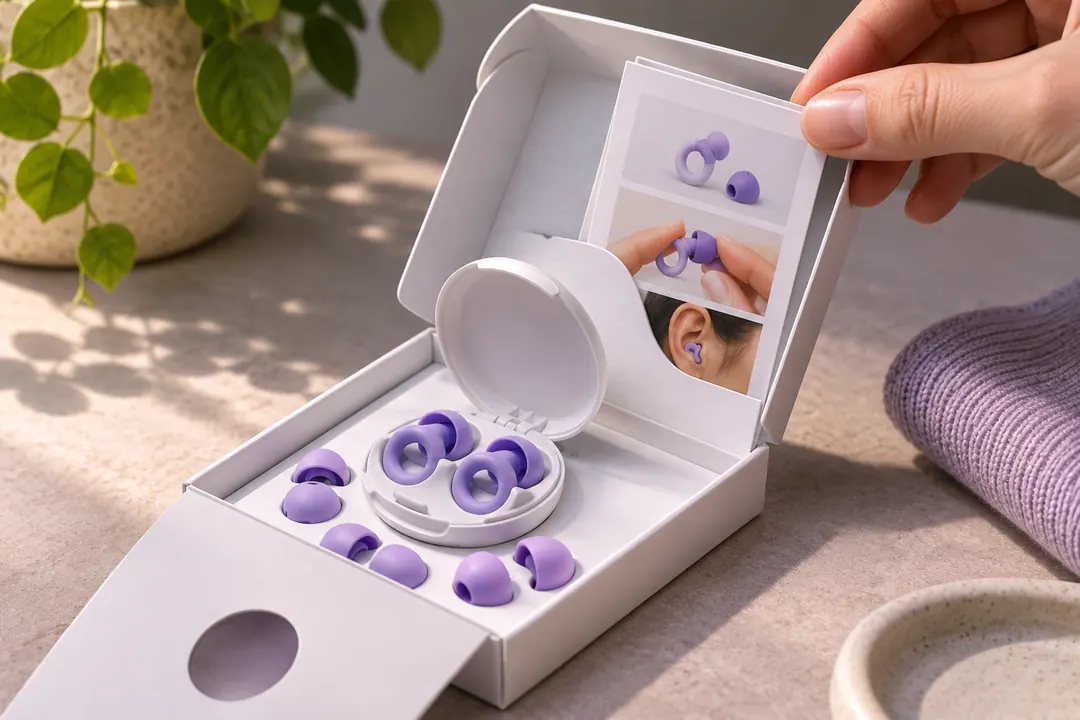
Keep sleep questions separate from rating questions
For a sleep-oriented comparison, record the exact product, both labels where supplied, the manufacturer’s fitting directions, and the questions the ratings leave unanswered. Those can include overnight comfort, correct fit during use and awareness of needed signals.
We have not measured those outcomes. Follow the exact product’s directions, and do not assume that a laboratory rating proves a comfortable seal for your ear or guarantees alarm audibility.
The Loop Quiet 2 research-based review provides the product-specific context. Its published labels remain distinct from a personal attenuation or overnight-comfort measurement.
Method and limits
We reconciled a research paper, current NIOSH guidance and Loop’s published labels, checked October 11, 2026. This is a rating-reference guide, not a hearing-protection compliance verdict or a sleep trial. Use like-for-like labels for the initial comparison and keep personal attenuation and comfort evidence distinct.