For most people who want one reusable pair made for sleep, start with Loop Dream. Loop designs it for side sleepers and rates it at 21 dB NRR. If the noise is loud, such as a snoring partner close by, HEAROS Xtreme foam plugs carry the highest label rating in this list at 33 dB NRR. Mack’s Slim Fit is the pick for small or sensitive ear canals, Mack’s Pillow Soft is for sleepers who don’t want anything inside the canal, and Ohropax Classic is the wax option.
Nobody at Sound Sleep Gear wears or measures these earplugs. This list compares what each maker publishes, chiefly the Noise Reduction Rating (NRR) on the label, plus the fit and reuse directions that decide whether that number applies to your ear.
The short answer
| Your situation | Pick | Why |
|---|---|---|
| You want a reusable pair made for sleep | Loop Dream | Low-profile silicone, two tip styles, four tip sizes |
| Loud snoring or traffic is the problem | HEAROS Xtreme Protection | 33 dB NRR, the highest label value here |
| Standard foam plugs feel too big | Mack’s Slim Fit | Mack’s designs it for small or sensitive ear canals |
| You don’t want a plug inside your ear canal | Mack’s Pillow Soft | Moldable silicone that covers the canal opening |
| You’d rather try wax | OHROPAX Classic | Wax, cotton wool and petroleum jelly, molded over the canal |
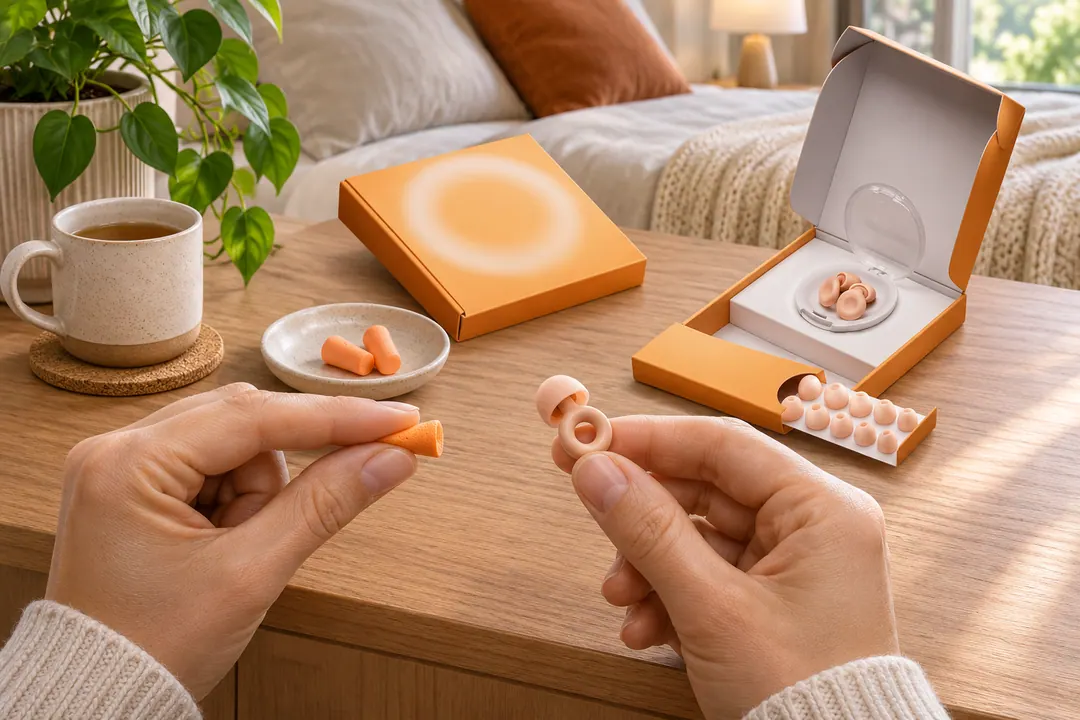
Maker specs compared
| Earplug | Type and fit | NRR (maker) | Reuse (maker) |
|---|---|---|---|
| Loop Dream | Silicone body; foam-silicone and double tips, XS to L | 21 dB | Reusable silicone |
| HEAROS Xtreme Protection | Polyurethane foam, rolled and inserted | 33 dB | Not published |
| Mack’s Slim Fit | Soft foam for small or sensitive ear canals | 31 dB | Not published |
| Mack’s Pillow Soft | Moldable silicone putty; covers the canal | 22 dB | Up to 5 uses |
| OHROPAX Classic (US) | Wax earplug that seals from outside | 23 dB | Not published |
Values are from each maker’s product page, checked October 5, 2026. “Not published” means the maker’s page gives no reuse limit.
What the NRR on the label means
In the United States, the NRR is a regulated label value. The EPA’s hearing protector rule (40 CFR Part 211, Subpart B) defines it as a single-number rating in decibels, derived from lab attenuation tests that account for fit variability, and requires it on the primary label.
Use NRR to compare US lab labels. Subtracting NRR from a bedroom sound reading does not measure the sound reaching your ears. Fit and the sound itself matter, and the label cannot tell you whether you will hear an alarm. The NRR and personal fit guide explains the distinction and links the current NIOSH occupational fit-testing guidance.
The picks
Loop Dream: best reusable plug made for sleep
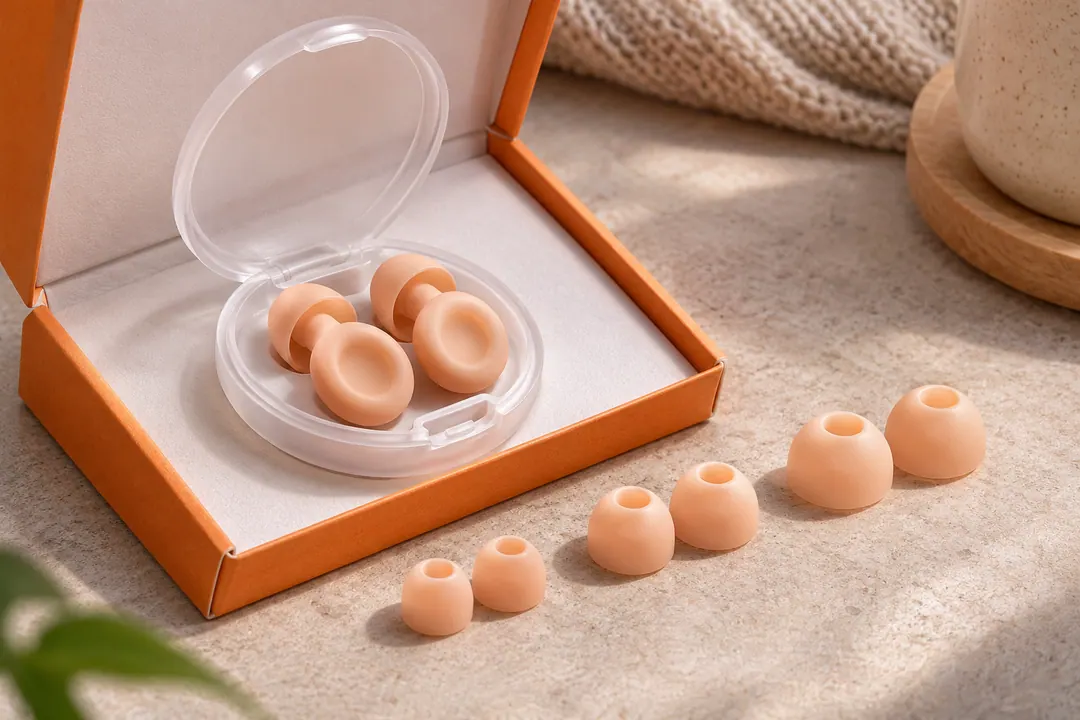
Loop describes Dream as a low-profile shape made from its softest silicone to reduce pressure for side sleepers, which is the main reason to choose it over a general-purpose plug. The box includes two tip styles, Loop Dream Foam-Silicone Ear Tips and Loop Dream Double Tips, each in XS, S, M and L, plus a bedside carry case.
Loop rates Dream at 21 dB NRR and also quotes 27 dB under a separate label, SNR, so compare NRR with NRR. Loop calls 21 dB NRR the highest rating in its lineup and lists Quiet at 14 dB NRR, so if you already own a Loop Quiet pair, Dream is the higher-rated sleep option. Our Loop Dream review covers its two tip systems in detail, with a seven-night fit log you can run yourself, and the Loop Quiet 2 review covers the everyday model.
HEAROS Xtreme Protection: best for loud snoring or traffic
Hearos makes Xtreme from soft polyurethane foam that you roll between your fingertips before inserting, and says it was tested to the ANSI S3.19-1974 method the EPA rule uses. Its label rating is 33 dB NRR , the highest in this list. Hearos describes the foam as hypoallergenic, with a closed-cell skin meant to resist dirt build-up.
Choose it when the noise is loud and close and you are comfortable with an in-canal foam plug. Hearos sells it in 14, 56 and 100 pair counts; the link below is the 14 pair box.
Check HEAROS Xtreme Protection on Amazon
Mack’s Slim Fit: best for small or sensitive ear canals
Mack’s says Slim Fit “provides maximum comfort for small or sensitive ear canals,” and explains on the same page that people with smaller canals more often find normal-size foam plugs uncomfortable. It still carries a 31 dB NRR, only 2 dB below Hearos Xtreme.
Mack’s fitting directions apply to any foam plug: pull the outer ear up and back with the opposite hand to straighten the canal while inserting, and leave enough of the plug outside to grip for removal. If a plug won’t stay in after absorbing moisture, Mack’s suggests switching to a fresh, dry one.
Check Mack’s Slim Fit on Amazon
Mack’s Pillow Soft: best if you don’t want anything in the canal
Pillow Soft is moldable silicone putty that you shape over the opening of the ear canal. Mack’s is blunt about this: “Do not insert into ear canal! COVER ONLY!” Its rating is 22 dB NRR, lower than foam, which is the tradeoff for a plug that seals from outside.
Mack’s says to discard each plug when it is soiled or no longer sticky, after up to 5 uses, and warns that a misused plug may become lodged in the ear. Use the whole plug and don’t cut it down to make it smaller.
Check Mack’s Pillow Soft on Amazon
OHROPAX Classic: best wax option
Ohropax Classic is a blend of cotton wool, petroleum jelly and paraffin wax. Like Pillow Soft, it is an on-ear plug: you knead it into a ball and press it over the canal, never into it. Ohropax says the on-ear design makes it suitable for all ear canal sizes. The US version is labeled 23 dB NRR and comes as 12 pieces. Ohropax’s directions start with “Before use, completely remove cotton wool.”
No Amazon listing we checked was sold by Amazon or Ohropax, so this is a search link. Look for the US version, which Ohropax lists at 23 NRR.
Search Amazon for OHROPAX Classic wax earplugs
How to choose
Start with where the plug sits. Foam plugs such as Hearos Xtreme and Mack’s Slim Fit sit inside the canal and carry the highest ratings here. Silicone putty and wax sit over the canal opening and are rated lower, at 22 and 23 dB NRR. Loop Dream uses interchangeable ear tips on a soft silicone body.
Match the rating to the noise. A partner snoring in the same bed is a different problem from distant traffic. The EPA rule ties the NRR to correct fit and flags low-frequency noise, so a higher label number describes the lab result rather than your own attenuation.
Decide on disposable or reusable. Loop sells Dream as a reusable silicone plug. Mack’s limits Pillow Soft to up to 5 uses. The foam and wax makers here don’t publish a reuse count on their product pages, so follow the package.
Plan for what you must still hear. Any plug that works will also soften an alarm clock, a child or a smoke alarm. Check what you can hear with the plugs in before relying on them overnight.
Consider the rest of the room. The National Heart, Lung, and Blood Institute advises keeping the bedroom “quiet, cool, and dark.” If you’d rather mask noise than block it, see our LectroFan EVO Review: Choose a Tone Before Chasing Volume . If you want audio in your ears overnight, that’s a different product, covered in our sleep earbuds for side sleepers guide .
Earplugs don’t diagnose or treat any sleep or hearing condition. The NHLBI lists frequent loud snoring, gasping for air and breathing that starts and stops as possible symptoms of sleep apnea and advises talking to a healthcare provider about them, so that pattern calls for a clinician, not a better earplug.
FAQ
What is the NRR of Loop Dream?
Loop lists Loop Dream at 21 dB NRR, the rating US labels use. Loop’s page also quotes 27 dB under a separate label, SNR, so compare NRR figures with NRR figures when you shop.
Will earplugs block a conversation in the next room?
They reduce it rather than erase it. Loop says medium sounds such as a TV in another room should drop to faint murmurs with Dream, and loud sounds stay audible at a lower volume. Fit decides how close you get to the label.
Is a higher NRR always better for sleep?
Not automatically. The rating assumes the plug is worn as directed, so a plug that fits your ear and stays comfortable on the pillow can do more than a higher-rated one that loosens or hurts.
Can I reuse foam earplugs?
Check the package. The makers here publish reuse limits only for some products, such as Mack’s Pillow Soft silicone, which Mack’s says to discard when soiled or no longer sticky, after up to 5 uses.
Loop Dream and Loop Quiet 2, side by side
Both are reusable silicone earplugs from the same maker, and Loop sells Quiet 2 for focus, travel and sleep and Dream for sleep. Loop’s own pages publish these figures:
| Spec (Loop) | Loop Dream | Loop Quiet 2 |
|---|---|---|
| NRR (US label) | 21 dB | 14 dB |
| SNR (EU label) | 27 dB | 24 dB |
| Designed for | Side-sleeping comfort and noise reduction | Focus, travel and sleep |
| Ear tips | Foam-silicone tips and a double-tip design, in several sizes | Four sizes: XS, S, M and L |
| Washable | Yes | Yes |
| Returns | 100-day returns | 100-day returns |
Sources: Loop Dream product page , Dream sleep page , Quiet 2 product page , focus page and comparison page , checked November 8, 2026.
What the specs show: Dream carries the higher label on both scales, 7 dB higher on NRR and 3 dB higher on SNR. Loop describes Dream as its highest noise reduction. The labels do not show which one seals better in your ear or feels better lying on your side, and they say nothing about hearing an alarm. See the Loop Dream review and Loop Quiet 2 review for the product notes, and the sleep earplug NRR chart for 31 earplugs with sources.
Sources
- Loop Dream product page (Loop US)
- HEAROS Xtreme Protection product page
- Mack’s Slim Fit Soft Foam Ear Plugs
- Mack’s Pillow Soft Silicone Putty Ear Plugs
- OHROPAX Classic 12 pieces (USA)
- EPA hearing protective device labeling rule, 40 CFR Part 211, Subpart B (eCFR)
- NHLBI: healthy sleep habits
- NHLBI: sleep apnea symptoms